The Town That Vanished Because of an Insect
tourist info
History
There are disasters you can see coming, like an army or a drought. And there are disasters that arrive without anyone noticing, until it is far too late. That is how Borba lost, for two decades, everything it had built over centuries, and for three years even ceased to have a name of its own.
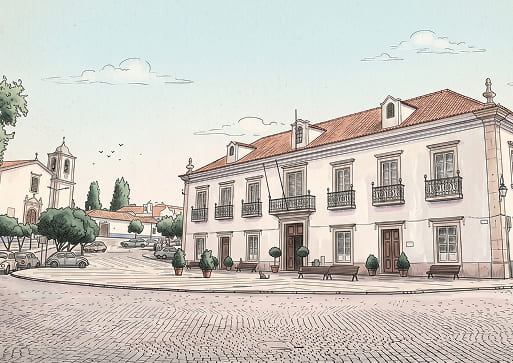
For two hundred years, Borba had no other economy: it lived on wine, and wine alone. Its families grew rich on it, its palaces were built with it, its clay-vat cellars, in almost every house, made the town one enormous, continuous winepress. It was that single, alternative-less wealth that gave the land its pride and its identity.
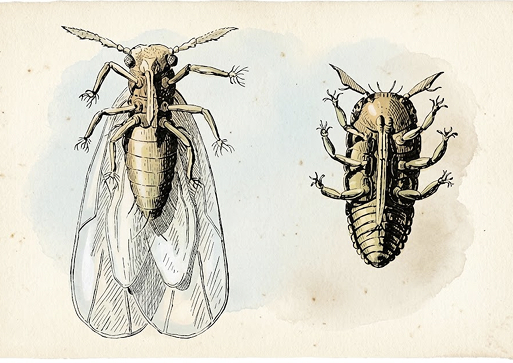
And it was precisely because there was no alternative that the disaster, when it came, was so complete. At the turn of the nineteenth century into the twentieth, a tiny insect, almost invisible to the naked eye, having arrived from America by way of Europe, settled into the roots of the Alentejo vines: phylloxera. It does not attack the leaf or the bunch. It attacks the root, underground, where no one can see. And it kills the vine slowly, from the inside, with no symptoms until it is too late. There is no treatment that can stop it, once it has taken hold.
Borba, which had lived exclusively on the vine for two hundred years, was among the hardest hit in the whole country. The vines died by the thousands. The old clay-vat cellars, with no grapes to press, were closed one by one, turned into warehouses, into homes, into shops. What had been the productive heart of the town emptied out, house by house. And the people of Borba, who for two hundred years had never needed to know how to do anything else, did not know how, or were unable, to react in time.
The economic ruin was such that, on 12 July 1895, something happened that no army, no siege, no invasion had ever managed in six hundred years of history: Borba ceased to be a council. The State abolished its municipal autonomy and annexed it to Vila Viçosa. For three years, there was no Borba council, no Borba administration. There was only a parish dependent on the neighbouring town. The land that had been rich enough to raise palaces no longer had even the economic strength to govern itself.
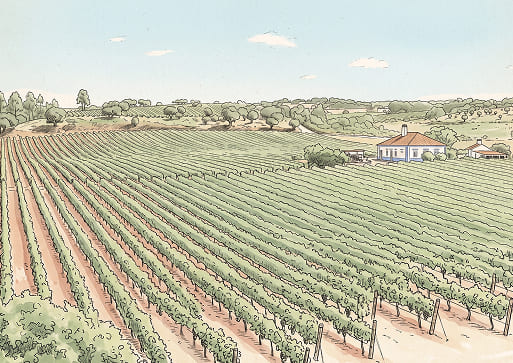
The humiliation lasted until 1898. That year, by decree of 13 January, Borba regained its council. And slowly, over the century that followed, it regained its vines too: new varieties, grafted onto American rootstock resistant to the insect, the only defence science ever found, were replanted in the same fields where everything had died. Decades later, in 1955, the winegrowers of the land joined together in a cooperative so they would never again depend on a single harvest or a single middleman: the Adega de Borba was born.
Today, when you taste a glass of wine from this region, you are tasting the result of a rebuilding, not a continuity. Between the century-old vines of Borba and those of today, there is a gap: the years when an insect the size of a grain of sand erased a town from the administrative map of Portugal. Borba did not die. But for three years, it had no name of its own. And the reason was so small it would fit under a fingernail.
Curated by Storypath


