SOVIBOR, Adega do Passo
museum
History
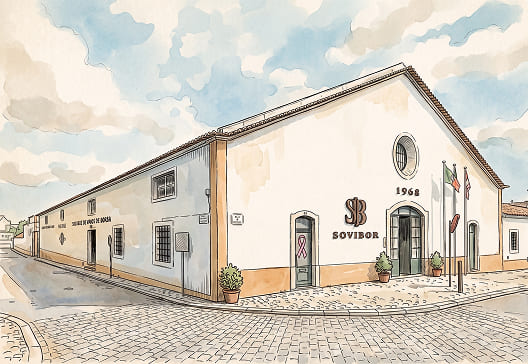
Look at the neighbourhood before you go in. Beside this winery stands one of the four Stations of the Lord of Borba, the marble chapels of 1755 past which, every year, the Holy Week procession still walks. It was that chapel that gave the house its name: Adega do Passo, the Winery of the Station. And it was the brotherhood that organises the procession, the Third Order, that gave its name to one of its wines, Passo dos Terceiros. In Borba, faith and wine share the same street, and in this case they share the same wall.
The building has been standing for more than two centuries. Which means it was already here when phylloxera killed the vines and erased Borba from the map; when the palaces of wine rose and then emptied; when twelve men founded the cooperative in 1955. It watched all of that pass its door, and carried on. And in 1968, two small producers of the town, each with decades of activity behind them, decided to join in a single house, SOVIBOR, the Borba Wine Company. It was the other answer to the same question the cooperative had answered thirteen years earlier: how does a small producer survive in a land of wine? Some joined together in a cooperative; these joined together as a family.
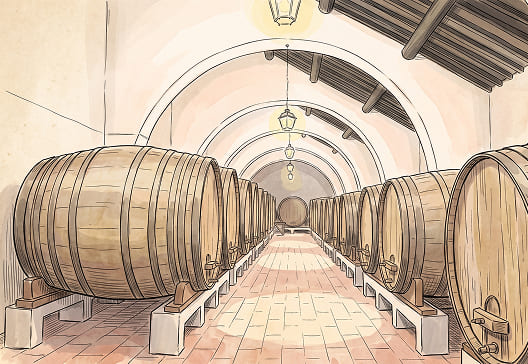
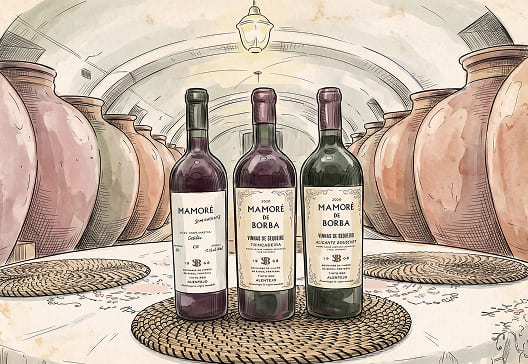
Inside, time has not been erased. The wine is still trodden in marble presses, the stone of the land serving the land's other product. It ages in clay vats, as the Romans did and as every house in Borba did before the cooperative; in concrete tanks; in used wood, three thousand hectolitres of casks in an ageing cellar that is, in itself, a monument. Alongside, modern technology. The house believes in both at once, and says so without ceremony: tradition and modernity side by side.
The grapes come from more than one hundred and seventy hectares of vineyard in the region, with a significant share of old vines, the ones phylloxera did not take, or those replanted so long ago that they are old enough to tell stories. And there is one brand of the house that explains Borba better than any text: it is called Fazer as Onze, "doing the elevens." It is the Alentejo custom of stopping work in mid-morning for a glass and a piece of bread. Here, that gesture has a name, a label and a bottle.
The winery can be visited: the clay-vat room, the casks, the tastings and, in season, the harvest. Come in. And when you leave, look once more at the chapel next door. For more than two centuries these two doors have opened onto the same street, one for praying, the other for drinking. Borba never thought the two were incompatible.
Curated by Storypath


