Royal Tapada (Tapada Real)
green space
History
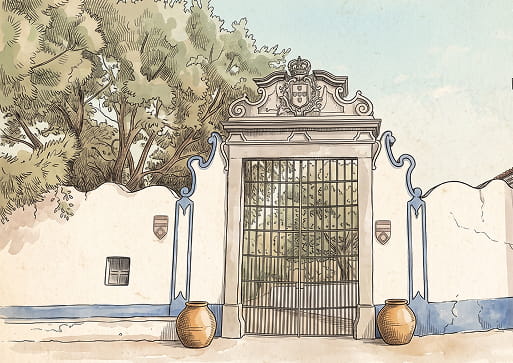
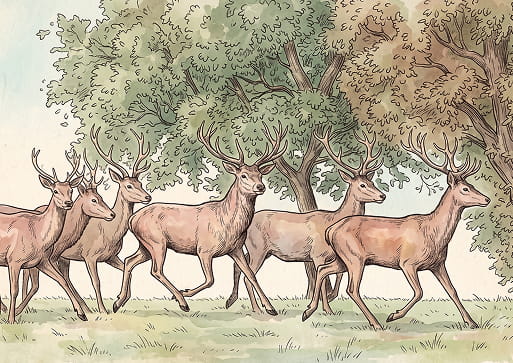
This wall that fades into the landscape is eighteen kilometres long. On the other side lives a world almost no one has seen: centuries-old cork and holm oaks, deer, wild boar, three chapels, a hunting lodge, and a silence that once belonged only to kings. This is the Tapada Real, the largest walled space in the country, and one of the oldest hunting reserves in Portugal.
The man who created it, around 1515, was D. Jaime, 4th Duke of Braganza, the same man who raised the Ducal Palace, the Convent of Chagas and the Knot Gate. He ordered the Herdade do Meio, between the Borba and Asseca streams, enclosed with a rammed-earth wall, and reserved that piece of the Alentejo for his house's exclusive hunting. The dukes who followed widened the enclosure, generation after generation, until the wall embraced six kilometres in length by more than three in width. Inside, time began to run at a different speed: while outside the montado woodland was being cut and cultivated, in there it remained untouched, kept behind a wall, like a sample of the original Alentejo.
It was the private paradise of twenty generations. The dukes hunted in it; after 1640, the kings travelled from Lisbon expressly for it. And none loved it like the penultimate one: King Carlos, the hunter king, for whom Vila Viçosa was the refuge of his soul. It was here that he spent his last days, in late January 1908, between hunts in the tapada and evenings at the Palace. On the morning of 1 February, he left this walled world and departed for Lisbon. By the end of that same afternoon, he was dead, assassinated in the capital's Terreiro do Paço. The last place where the king was happy was this one. On the other side of this wall.
The monarchy ended, but the tapada did not. By the testamentary will of the last king, Manuel II, the family's assets passed to the Foundation of the House of Braganza, which manages it to this day. And the hunters' former paradise gained an improbable second life: it became a laboratory. For more than two decades, scientists have been studying the montado there, precisely because five hundred years of wall made it one of the best-preserved ecosystems in the Alentejo. The wall that once guarded the kings' game now guards something else: the knowledge of what this land was before us.
The Tapada rarely opens to the public, and perhaps that is its lesson. In a town where everything can be visited, this is the place one respects from a distance. Lean against the wall and listen: on the other side, the Alentejo of five hundred years ago goes on living its life, without needing us. Some heritage is meant to be shown. This one is preserved by staying hidden.
Curated by Storypath


