Interpretation Centre of the Restoration War
In 1662, a Spanish general burned this town's archive to erase its memory. Today, this is where Portugal keeps the memory of the war that defeated him.
Listen to the story
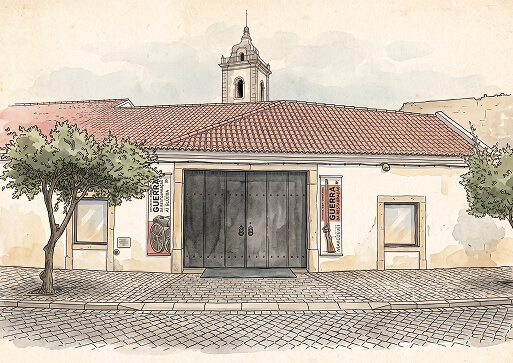
There is a quiet justice in this building, and it is worth starting there. In 1662, when the army of Don John of Austria took Borba, hanged its defenders and ordered the Municipal Archive burned, centuries of papers, charters and rulings went up in flames in a single afternoon. The town was left without a written past. Three and a half centuries later, in 2025, it was precisely in Borba that the Interpretation Centre of the Restoration War opened: the place where the whole story of that war, from 1580 to 1668, is told to anyone who wishes to hear it. The town that lost its memory became the one that keeps it for everyone.
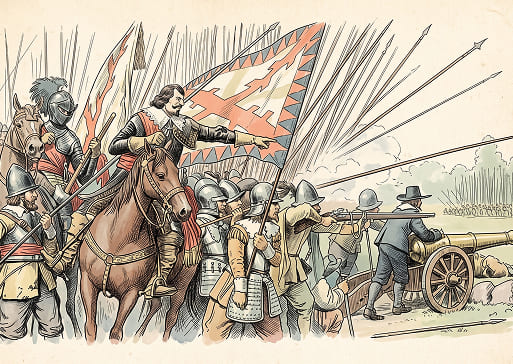
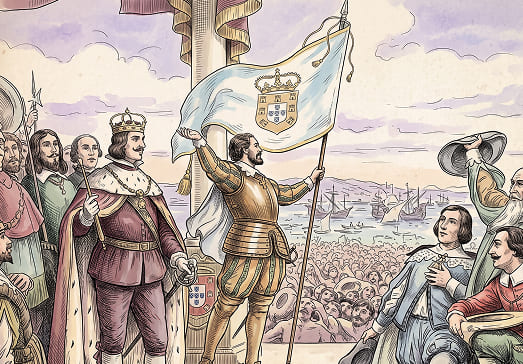
If you have already walked this map, much of what you will find here has already passed before your eyes, in fragments. The Duchess of Vila Viçosa who refused to marry Philip II in 1583 and kept the crown for her grandson. The Duke who, on a hunt in the Tapada, said yes to the conspiracy of 1640. The captains hanged in the Rua Direita. The castle of King Dinis, taken and ruined. The Matriz of Vila Viçosa, whose vault Caracena's cannons weakened in 1665 so that it would collapse ninety years later. And the field of Montes Claros, just over there in Rio de Moinhos, where on 17 June 1665 the last great Spanish army was crushed, and where today grow the vines that give this land's wine its name. This Centre is where all those fragments connect. It is the map beneath the map.
It was built in partnership with the Battle of Aljubarrota Foundation, and there is an echo in that which is hardly a coincidence. Aljubarrota, 1385: the first time Portugal saved its independence in battle. The hero of that day, Nuno Álvares Pereira, made Borba his headquarters and was the first lord of this town. Montes Claros, 1665: the second time. Fought in the territory of Borba. The foundation that keeps the memory of the first independence came to help the town of the second keep its own. Few places in Portugal can say they were present at both.
What you will find inside is an interactive space, designed so that the war can be understood and not merely read: the context of sixty years of Habsburg rule, the revolt of 1640, the twenty-eight years of war on the Alentejo frontier, and the day it was all decided a few kilometres from this door. At the opening, the Minister of Defence summed up the meaning of the place in a single sentence: the Portuguese were not born to serve.
Come in. Once you know the whole war from here, the streets of Borba and Vila Viçosa will look different to you. Because each of them was, one day, the battlefield of this story.
© 2026 StoryPath.pt — Made in Alentejo