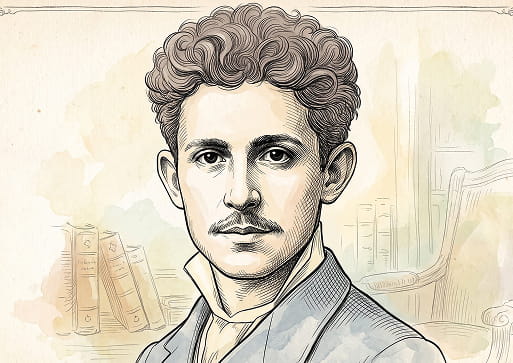
Henrique Pousão: The Master of Light and Portuguese Naturalism
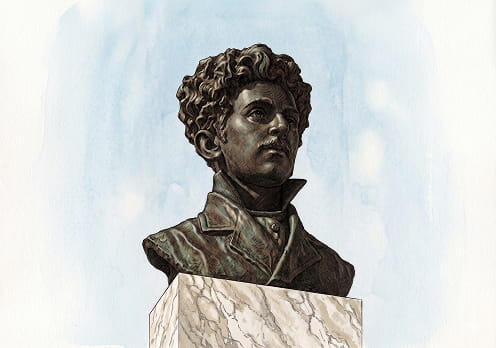
statue
History
Life and Early Talent
Henrique César de Araújo Pousão (1859–1884) is widely regarded as the most innovative Portuguese painter of his generation. Born in Vila Viçosa, he revealed a precocious talent that led him to the Academy of Fine Arts in Porto, where he studied under Thiers and João Correia. The Transformation in Italy
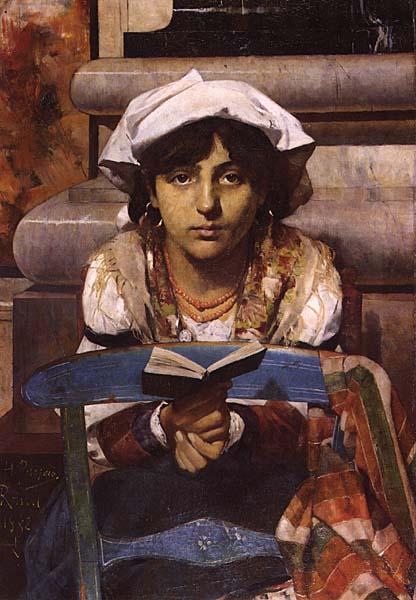
In 1880, he moved to Paris as a scholarship student, studying under masters such as Cabanel and Adolphe Yvon. However, it was his time in Italy (Rome, Naples, and Capri) that defined his style. Moving away from rigid academicism, Pousão surrendered to Mediterranean luminosity. His works from this period—such as his famous views of courtyards and white houses—demonstrate an almost Impressionist ability to synthesize forms through color planes and vibrant contrasts of light and shadow. Artistic Characteristics
Unlike many of his contemporaries, Pousão did not limit himself to a meticulous description of reality. His painting is characterized by:
Economy of Means: Broad and confident brushstrokes.
Modernity: A tendency toward geometric abstraction in sun-drenched facades.
Melancholy and Realism: Deep psychological portraits, as seen in "Esperando o Sucesso" (Waiting for Success).
A Short but Eternal Legacy
A victim of tuberculosis, Henrique Pousão passed away at just 25 years old in Vila Viçosa. Despite his brief career, his work anticipated paths that Portuguese painting would only revisit decades later. His main collection is preserved today at the National Museum of Soares dos Reis in Porto, serving as an eternal testament to a genius who knew how to "paint the silence of light."
Curated by Storypath


