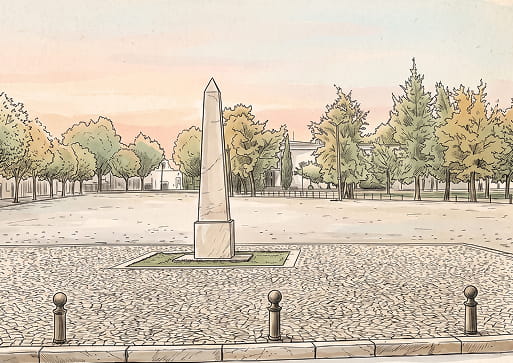
Memorial to the English Soldiers
statue
History
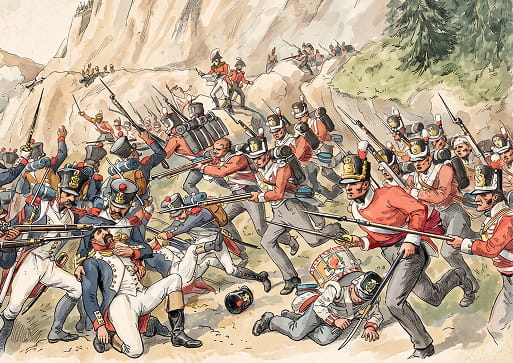
In July 1809, the Battle of Talavera was fought in Spain. It was a slaughter, and the hospitals of Elvas couldn't cope with so many wounded. The carts began climbing the road to Vila Viçosa, loaded with shattered British soldiers, and they ended up at the only building large enough to receive them: the Ducal Palace. The palace of the dukes, the seat of the kings of Portugal, became a field hospital. And so it remained until the end of the war, and Father Espanca left us a portrait of what was left of it: a palace with no doors at the main entrance, the noble halls stripped even of their furniture, and floors that no one cleaned any more. The noblest place in the kingdom, turned into an amputation ward.
Many did not survive. To the wounded of Talavera were later added those of Albuera and the sieges of Badajoz, and those killed by fever, without a single shot fired. And it was then that a problem arose which is hard to grasp today: they were Protestants. They could not be buried in consecrated ground, alongside Catholics. So they were buried in unconsecrated ground, in three different sites within this council: first, in the olive groves along the road to the Augustinian convent, then in the water-meadow of Morgadinho, where they were carried by cart, and finally, for good, here, in the lower Carrascal.
Father Espanca still saw them. He wrote that this whole stretch of ground was covered in graves, and that almost all of them bore a mark: small oval wooden plaques, painted white with oil paint, bearing the name and rank of the dead. He described their funerals, held with military pomp, in which a fellow soldier served as chaplain and read the prayers of the English rite; and he kept the name of one of them, Major of Brigade Mahomey, who died in 1809, whose chaplain was an officer of the 95th Regiment of Rifles. But he also wrote, with resignation, the sentence that seals the fate of them all: "as time ruins everything, these memories vanished." The wood rotted, the names faded, the olive groves were ploughed over. Thousands of young men, who came to die in a country that was not their own, were left without so much as a plaque bearing their name.
And so they remained for two centuries. Until, a few years ago, two researchers from the town did a simple thing: they read carefully what Father Espanca had written, followed his directions, and went out into the fields to look. They found the three cemeteries, one by one, exactly where the chronicler had placed them. They published a book, the town council raised this marble memorial, and ever since, every year, the town comes here to lay flowers. The names remain lost; the memory, though, has returned. A priest wrote it down in 1880 for whoever should come after, and whoever came after went and found it.
Pause a moment before this stone. Beneath these fields lie Britons, Scots, Irishmen, who set out for a war on the other side of Europe and ended up buried in an Alentejo olive grove, far from everything they knew. They came to fight for Portugal's independence, and this was the piece of Portugal they were left with. When the mayor of this town unveiled the memorial, he said the fairest thing that could be said about them: today, we exist because of them too.
Curated by Storypath


