D. Álvaro de Abranches da Câmara
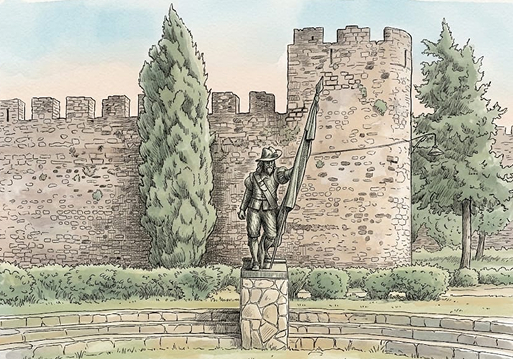
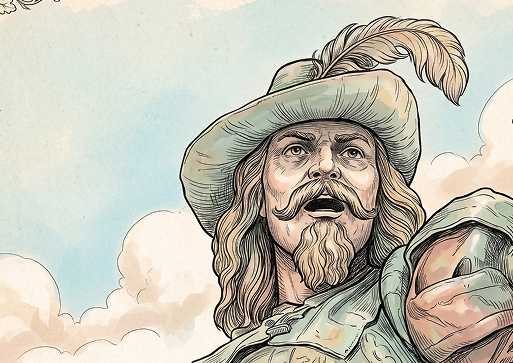
statue
History
D. Álvaro de Abranches da Câmara remains one of the most celebrated figures of the Portuguese Restoration War (1640–1668). Born into high nobility, he was the son of D. Rodrigo de Abranches and D. Maria da Câmara, inheriting a legacy of military service and political influence.
The Revolution of 1640 His most significant historical contribution occurred on December 1, 1640. As one of the core members of the "Forty Conspirators," he participated in the storming of the Royal Palace in Lisbon. He was directly involved in the capture of the Duchess of Mantua (the Spanish Governor) and the elimination of Miguel de Vasconcelos, the hated Secretary of State.
Military Career and Governance Following the acclamation of King João IV, D. Álvaro’s expertise was vital in securing the borders against Spanish retaliation. His career was marked by several high-ranking appointments:
Governor of Arms: He served in critical regions, most notably in the Province of Beira and Alentejo, where he organized defenses and led maneuvers against Philip IV’s forces.
General of the Cavalry: Known for his tactical bravery, he oversaw the modernization of the Portuguese horse guards during the early years of the conflict.
Diplomatic and Court Roles: Beyond the battlefield, he served on the Council of War, advising the monarch on the long-term strategy for Portuguese sovereignty.
Legacy D. Álvaro is remembered as a symbol of the Portuguese spirit of resistance. His actions helped transition Portugal from a province of the Spanish Habsburgs back to an independent kingdom under the House of Braganza. He died in 1660, having lived to see the independence he fought for become firmly established, though the war itself would not officially conclude until the Treaty of Lisbon in 1668.
Curated by Storypath


